Full Body PPF vs Partial PPF: Which Is…
Full Body PPF vs Partial PPF: Which Is Better for Your Car? You’ve decided to…
You’ve decided to protect your car’s paint. Smart move. But now you’re stuck at a bigger question: should you cover the whole car, or just the parts that take the most hits? If you’ve been researching the best paint protecting films in Lucknow, you’ve probably noticed most guides just list pricing packages and call it a day. This one is different — we’re breaking down the real trade-offs so you can pick with confidence, not guesswork. And if you’re comparing PPF in Lucknow options right now, this decision matters more than the brand of film you choose, because coverage decides how much protection your car actually gets. Studios like Always Dry Lucknow see this question every single day from new car owners and seasoned enthusiasts alike, so let’s settle it once and for all.
Paint Protection Film is a clear, thermoplastic urethane layer applied over your car’s factory paint. It absorbs the damage that would otherwise land directly on the clear coat — stone chips, minor scratches, bug splatter, bird droppings, and UV exposure. Good films come with self-healing properties, meaning light swirl marks disappear on their own when exposed to heat. The real question isn’t whether PPF works. It’s how much of the car needs it.
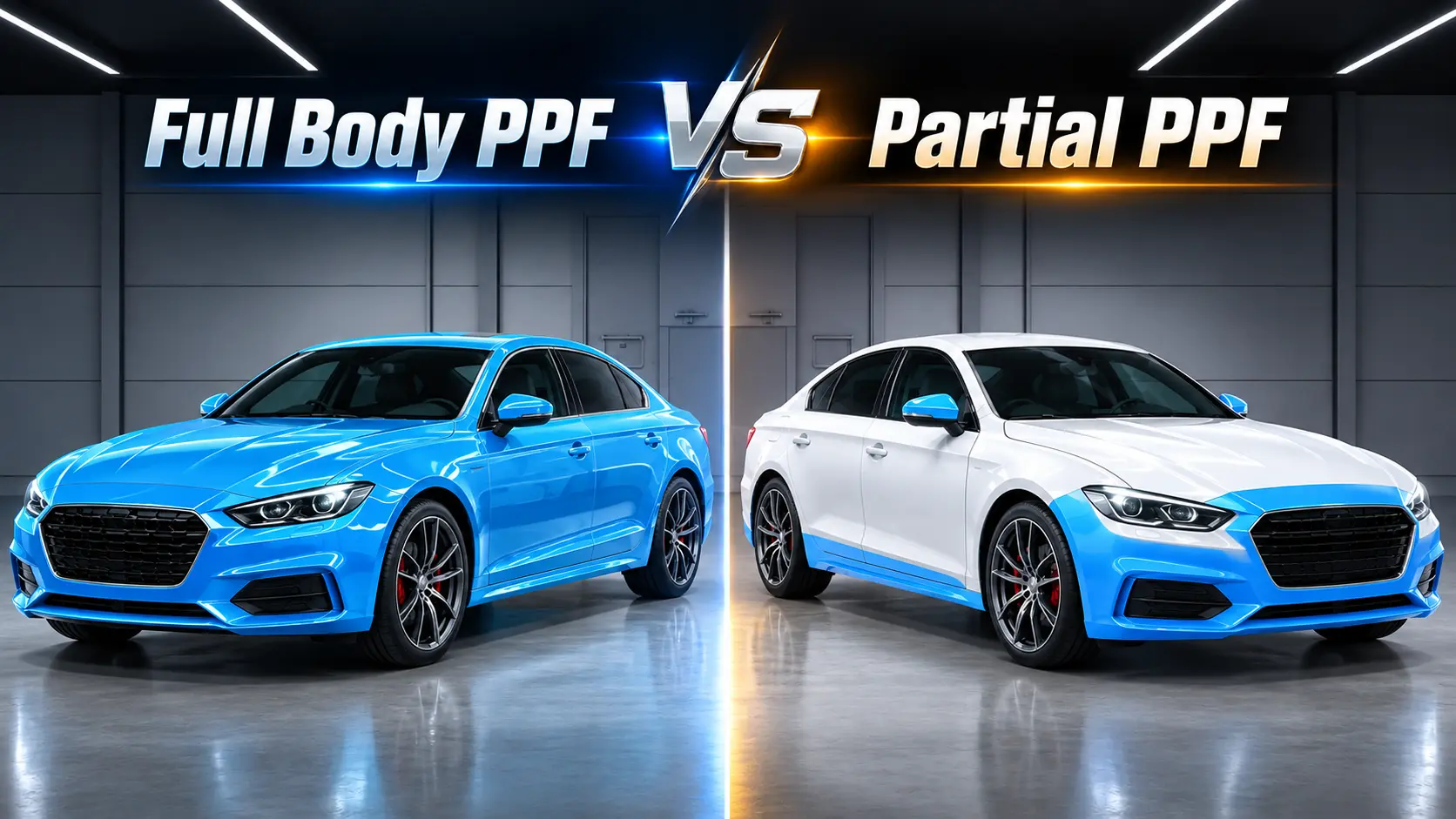
Full body PPF means wrapping the entire exterior of your car — bonnet, roof, doors, pillars, boot, bumpers, fenders, and mirrors — in the film. Nothing is left exposed.
Why people choose it:
Where it falls short:
Full body coverage makes the most sense for new car owners, luxury vehicle owners, and anyone planning to keep the car long-term or sell it at a premium later.
Partial PPF protects only the high-impact zones — typically the front bumper, bonnet, headlights, side mirrors, door edges, and sometimes the A-pillars. These are the areas that take the brunt of stone chips, road debris, and daily wear.
Why people choose it:
Where it falls short:
Partial coverage suits owners with tighter budgets, older vehicles nearing resale, or those who mainly drive in low-traffic, well-maintained areas.
Factor | Full Body PPF | Partial PPF |
Coverage | Entire exterior | High-impact zones only |
Cost | Higher upfront | Lower upfront |
Installation time | Full day or more | A few hours |
Resale value impact | Maximum protection, better resale | Moderate protection |
Visible seams | None | Possible at film edges |
Best for | New/luxury cars, long-term owners | Budget owners, short-term use |
Instead of picking based on price alone, think through these:
A lot of car owners default to whatever package a studio pushes hardest, without weighing their own driving habits. That’s backwards. Your car’s paint protection should match how you actually use the car — not a generic bundle. This is exactly where working with an experienced studio makes the difference. A team like Always Dry Lucknow walks you through your car’s specific exposure points, driving pattern, and budget before recommending coverage, rather than upselling the biggest package by default.
Getting these details right matters more than the coverage decision itself, because even full body PPF underperforms if the installation quality is poor.
Full body PPF is the stronger long-term investment if you want complete protection, a seamless finish, and maximum resale value. Partial PPF is a reasonable, budget-friendly starting point if you’re protecting only the most vulnerable zones for now. Neither choice is wrong — it depends on your car, your budget, and how long you plan to keep that showroom shine. If you’re still unsure which route fits your vehicle, a quick consultation with a trusted local studio can save you from an expensive re-do later.
Whether you’re leaning toward full coverage or just protecting the essentials, getting a professional opinion first will save you time, money, and regret. Reach out to a trusted PPF studio near you, share your driving habits and budget, and let them map out a coverage plan that actually fits your car — not just their price list.
Yes, if you plan to keep your car for several years or care about resale value. Full body coverage protects every panel uniformly, avoids visible seam lines, and reduces the risk of paint fading or scratching on areas partial PPF leaves exposed.
Partial PPF usually takes a few hours, while full body PPF can take a full day or longer depending on the car’s size, curves, and the installer’s experience. Rushed installations often lead to bubbling or peeling later.
No. Quality paint protection film is virtually invisible and does not alter your car’s colour, gloss, or design lines. It simply adds an extra protective layer over the factory finish.
Yes, but it’s better to plan this in advance. Extending coverage later can create visible seams where the old and new film sections meet, so discuss this possibility with your installer before the first application.
Most quality films last several years with proper care, and many come with self-healing properties for minor scratches. Longevity depends on film quality, installation standard, and how well you maintain the car afterward.
Full Body PPF vs Partial PPF: Which Is Better for Your Car? You’ve decided to…