Does PPF Protect Cars From Stone Chips &…
Does PPF Protect Your Car From Stone Chips and Scratches? You’re driving back from a…
You’re driving back from a highway trip. A truck ahead kicks up a stone. You hear a sharp “tink” on your bonnet. Your heart sinks a little. If you’ve owned a car for more than a year, you know this feeling well — and it’s exactly why so many Lucknow car owners are searching for the best PPF coating in Lucknow right now. If you’re only going to try one protection upgrade for your car this year, make it this one. And when you do, Always Dry Lucknow is the name most local owners land on for a job done right.
So, does PPF actually stop stone chips and scratches, or is it just another car-care buzzword? Let’s break it down honestly.
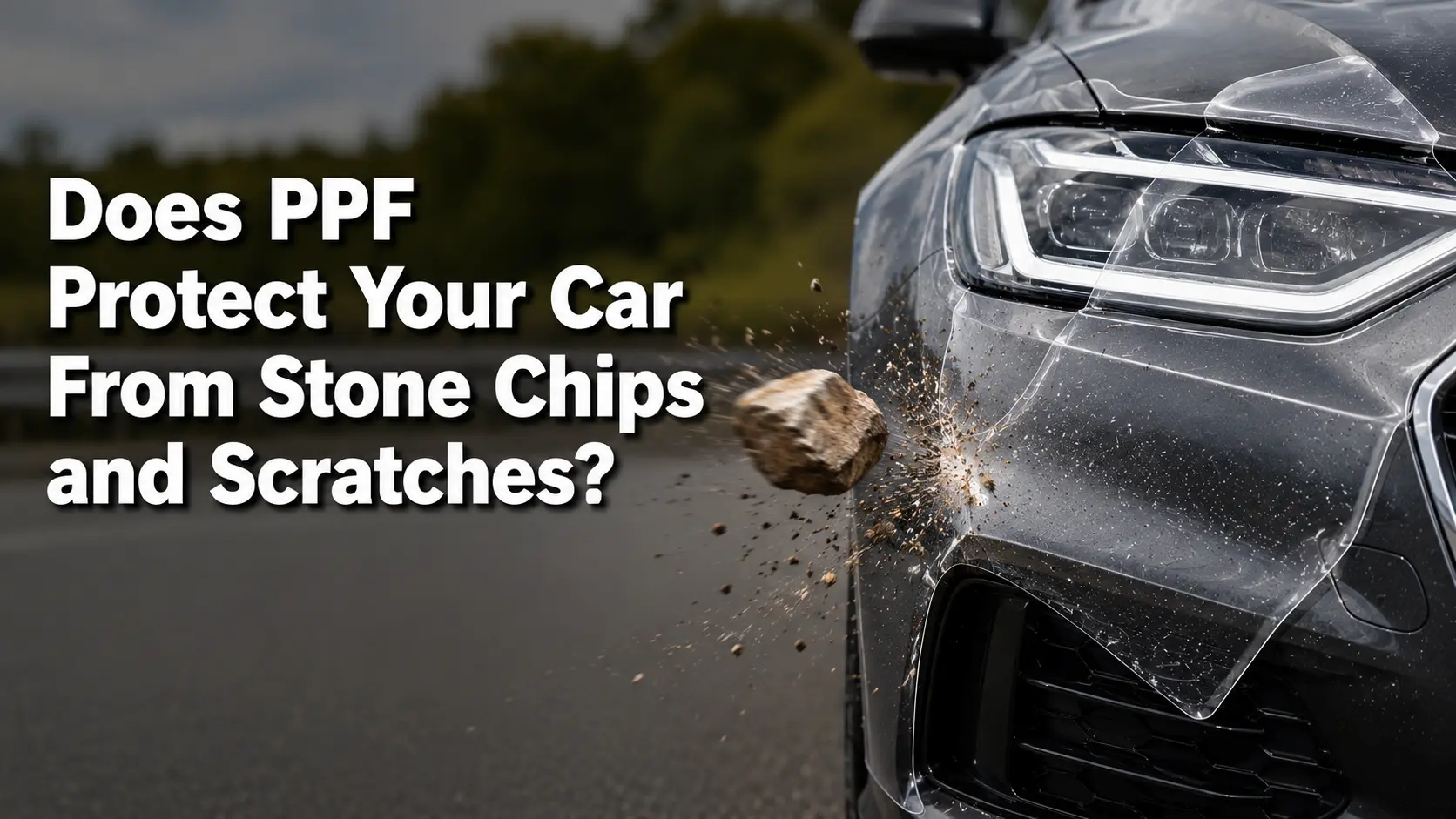
PPF (Paint Protection Film) is a clear, thin urethane film applied directly onto your car’s paint. Think of it as a second skin for your vehicle. It sits on top of the factory paint and absorbs the impact before it ever reaches the surface underneath.
Unlike ceramic coating, which is a chemical layer that bonds with paint for shine and hydrophobic effects, PPF is a physical barrier. That difference matters a lot when we’re talking about stone chips.
Here’s the honest, no-fluff answer: PPF is currently the most effective solution available for preventing stone chip damage and minor scratches on your car’s paint. It won’t make your car indestructible, but it dramatically reduces the risk and severity of paint damage.
Here’s how it actually works:
If a stone chip does happen, it damages the film, not your original paint. And unlike paint, film can be replaced in patches without a full repaint.
Local roads change everything. Here’s why PPF isn’t a luxury add-on for Lucknow drivers, it’s practical protection:
Cars here face a tougher daily grind than showroom conditions ever prepare them for.
A common question is whether ceramic coating alone is enough. It isn’t, if stone chips are your concern.
Protection Type | Stops Stone Chips | Stops Scratches | Adds Shine | Self-Healing |
No protection | No | No | No | No |
Ceramic coating only | No | Minimal | Yes | No |
PPF | Yes | Yes | Slight | Yes (quality films) |
PPF + Ceramic combo | Yes | Yes | Yes | Yes |
Ceramic coating is excellent for gloss, hydrophobic water beading, and easier cleaning. But it’s a thin chemical layer, it simply isn’t built to absorb a physical impact the way PPF is. If chip and scratch protection is your priority, PPF is the layer that does the actual work.
Not every panel needs full coverage, and that’s where a smart application plan matters. The highest-risk zones are:
Many owners choose a partial wrap covering these zones for a budget-friendly option, while others go for a full-body wrap for complete peace of mind. A good installer will guide you based on how and where you drive, not just push the most expensive package.
Quality PPF, when installed correctly, typically lasts 5 to 10 years depending on the film grade and how well it’s maintained. Cheap, low-grade film can yellow, bubble, or peel within a year or two, which is why the installer matters just as much as the film itself.
A few signs of a good PPF job:
“PPF makes my car scratch-proof forever.” Not true. PPF reduces risk and severity significantly, but a hard enough impact can still cause damage to the film. It’s protection, not immunity.
“PPF ruins the original paint underneath.” When installed and removed correctly by trained professionals, PPF protects the paint underneath and doesn’t damage it. Problems only occur with poor-quality film or careless installation.
“Ceramic coating and PPF do the same job.” They complement each other but serve different purposes — one protects against impact, the other enhances gloss and adds a hydrophobic layer.
If you plan to keep your car for several years, drive on Lucknow’s mixed road conditions regularly, or simply want your resale value protected, PPF pays for itself. A chipped, dull, or scratched paint job costs far more to repair or repaint than a one-time PPF investment protecting it in the first place.
If stone chips and scratches are a genuine worry every time you take your car out, it’s worth getting your vehicle assessed by a trained PPF installer rather than guessing.
Book a consultation with a trusted Lucknow-based PPF specialist and get a coverage plan suited to how you actually drive.
Not sure whether you need a full wrap or partial coverage? Ask for a free assessment before committing to a package.
Want your car looking showroom-fresh for years, not months? Talk to a specialist about film grade, warranty, and maintenance before you decide.
PPF significantly reduces the chances of stone chips reaching your paint by absorbing the impact. It cannot guarantee zero damage in every situation, but it prevents the vast majority of chips that would otherwise mark your paint permanently.
PPF is a physical film that absorbs impact, making it effective against stone chips and scratches. Ceramic coating is a chemical layer that adds shine and water resistance but doesn’t have the thickness to prevent physical damage like chips.
Good quality PPF typically lasts between 5 to 10 years with proper care. Its lifespan depends on film quality, installation standard, and how the car is maintained afterward.
Low-grade films can yellow with prolonged UV exposure. High-quality films are designed with anti-yellowing properties and maintain their clarity for years when installed by an experienced professional.
Partial coverage on high-impact areas like the bonnet, bumper, mirrors, and door edges is a practical and budget-friendly option. Full-body coverage offers maximum protection but is a bigger investment, the right choice depends on your driving habits and budget.
Does PPF Protect Your Car From Stone Chips and Scratches? You’re driving back from a…